
Brivudine for immunocompromised children with herpes zoster
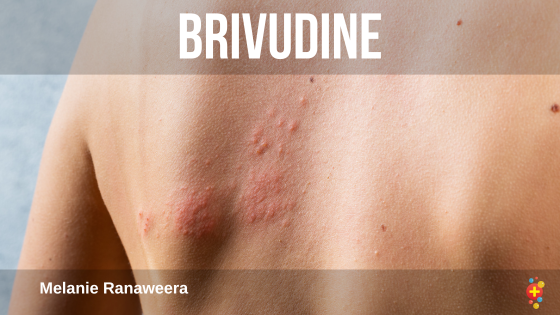

Primary infection with the varicella-zoster virus (VZV) causes chickenpox. In most healthy children, it presents as a self-limiting pruritic vesicular rash.

The virus can then enter a dormant period in the dorsal root ganglia. Reactivation of VZV manifests as herpes zoster (HZ). This can be an exceedingly painful vesicular rash distributed across a single dermatome – shingles.

Reactivation of the virus is provoked by a weakened immune surveillance system. Therefore, immunocompromised patients are at high risk and may suffer a more severe course, with delayed healing of lesions.
Currently, the treatment of cutaneous zoster is the antiviral aciclovir. The nucleoside analogue reduces viral replication and disease progression. Immunocompromised patients require 8-hourly intravenous therapy, which risks renal dysfunction. It is most often used as an inpatient treatment.
Although oral aciclovir is available, it is poorly absorbed, with only 20% bioavailability. This makes it a less favourable option, particularly in this vulnerable cohort. An efficacious oral drug provided in an outpatient setting to otherwise stable immunocompromised patients would be wonderful.
Brivudine is a highly potent antiviral drug with good oral bioavailability and once-daily dosing. It has been shown to be 200-100 times more effective in inhibiting VZV replication than aciclovir.
It has been widely adopted in adult practice, but there is limited data from small studies in the immunocompromised paediatric cohort. Vogel et al. explored this in a larger prospective cohort study. They wanted to determine whether this oral drug is effective for HZ treatment in immunocompromised paediatric patients and whether it would be better than current intravenous aciclovir, thereby enabling outpatient care.
Vogel C, Wetzel L, Wutzler P, Gruhn B. Treatment with brivudine in immunocompromised pediatric patients with herpes zoster. Chemotherapy. 2023; doi: 10.1159/000531034.
What did they look at?
This prospective cohort study examined 64 immunocompromised children with lesions suspicious for zoster. The diagnosis was subsequently confirmed by testing vesicular fluid from 34 patients and blood samples from 16.
After the diagnosis was confirmed, patients were treated with brivudine at a once-daily dose of 2mg/kg for at least 7 days. Patients were monitored daily, and treatment was extended for up to 3 weeks, depending on the rash’s regression.
Outcomes were: (1) crusting of the lesions; then (2) complete healing of lesions – the end goal of treatment.
Patients were offered additional drying preparations, antipruritics and analgesics, depending on need. As with all drug trials, patients were closely monitored for complications or adverse drug effects.
What did they find?
Of the 64 patients, 30 (46.9%) needed treatment for 1 week, 26 (40.6%) for 2 weeks, and the remaining 8 (12.5%) for up to 3 weeks. 16 patients declined supportive treatments; 18 wanted drying preparations, 8 received medication to reduce itching, and 4 requested analgesia.
50 patients demonstrated full crusting within the first week of treatment, and the remaining 14 patients within the second week (Figure 2). 17.2% had complete lesion healing within the first week, 60.9% during the second week, and 21.9% within the third week.

No patients experienced side effects during the study, and none suffered from post-herpetic neuralgia.
Limitations of the paper
The paper was a cohort study design. An RCT would have been a preferable trial design. Patients could have been split into two groups, with one receiving brivudine and the other receiving conventional aciclovir. Small patient numbers would have made this tricky.
The study also lacked any statistical analysis, making it difficult to establish the significance of the results. Conclusions from the study, then, were more observational.
Furthermore, they did not perform a power calculation, making it harder to determine the drug’s true effectiveness.
Patients had different medical conditions leading to their immunocompromised state and were on different treatment-specific therapies. It is hard to know whether these could have altered the effectiveness of brivudine.
Just how good was the paper?- the CASP Checklist
Does the study address a clearly focused issue?
Yes, the study made its aims clear and sought to contribute data to an area of research where there is currently a paucity of data.
Was the cohort recruited in an acceptable way?
The patients were selected by purposive sampling. This technique relies on the researcher’s judgement, making it subject to bias and affecting validity.
Was the exposure and outcome accurately measured to minimise bias?
There were no objective tests to confirm disease clearance. It was also unclear if one or several clinicians undertook these reassessments to ensure corroboration. It was unclear whether there was any vested interest in ensuring a particular outcome.
These factors introduce considerable bias into the study.
Have the authors identified all important confounding factors?
Although the authors described the patient demographics, including age, gender and disease process, they didn’t undertake any statistical analyses to adjust for potential confounding factors.
Potential confounding factors such as ethnicity, socioeconomic status, severity of immunosuppression, underlying disease process or additional drug therapies were not accounted for.
Was the follow-up of the subjects complete and accurate?
Patients were monitored until the resolution of their Zoster.
No immediate or long-term side effects of the drugs were encountered. However, patients were followed up for only 3 months post-treatment. This may not have been long enough to discover any longer-term drug toxicities.
What were the results?
The vast majority of children responded promptly to brivudine. 78% showed crusting of lesions within a week. By week 2, 78% of patients had complete healing, with the remaining 12% better by week 3.
All patients were treated in an outpatient setting, and none needed admission. The researchers concluded that oral brivudine offers an effective, well-tolerated therapy in immunocompromised children and could be used as an outpatient treatment.
Do you believe the results?
This is a very small cohort study that could have been improved by conducting a randomised controlled trial. Statistical analyses were not performed to adjust for confounding factors or to assess the significance of the results. It is hard to interpret the validity of the conclusions.
Can the results be applied to your local population?
The results reflect a population within a Western setting. Due to the limited description of the socio-economic status, ethnicities, disease status and vulnerability of the patients, one cannot draw direct comparisons with my local patient cohort. A more detailed demographic description of the patients would help.
Do the results fit with other available evidence?
Brivudine is more established in the adult population. The conclusions of this study corroborate three previous smaller studies (9-11) on immunocompromised children with HZ infection. Although two of these studies were small cohort studies, Heidl et al. randomised children to aciclovir or brivudine. Despite this more robust trial design, the significance of the results was limited by the number of patients and limited power.
How does this impact your practice?
This is the largest study to date, highlighting that immunocompromised children with HZ infection can be treated with a once-daily oral dose of brivudine.
There are significant issues with the study that limit its ability to change practice.
The data highlights the need for larger, more robust studies in the form of randomised controlled trials. Patients receiving brivudine need to be followed up longer to better understand its safety profile.
For now, use IV aciclovir as per your unit guidelines.
References
Bastard P, Galerne A, Lefevre-Utile A, Briand C, Baruchel A, Durand P et al. Different Clinical Presentations and Outcomes of Disseminated Varicella in Children With Primary and Acquired Immunodeficiencies. Frontier Immunology. 2022; 11:595478.
Patil A, Goldust M, Wollina U. Herpes zoster: A Review of Clinical Manifestations and Management. Viruses. 2022; 14(2):192.
Kuchar E, Szenborn L, Lis I, Jaroszewska A, Czeladzka J. Clinical Presentation of Herpes Zoster in Immunocompetent and Immunocompromised Hospitalized Children Treated With Aciclovir. Journal of paediatric haematology and oncology. 2016; 38(5):394-7.
Abdalla S, Briand C, Oualha M, Bendavid M, Béranger A, Benaboud S et al. Population Pharmacokinetics of Intravenous and Oral Aciclovir and Oral Valaciclovir in Pediatric Population To Optimize Dosing Regimens. Antimicrobial Agents and Chemotherapy. 2020; 64(12):e01426-20.
Andrei G, Snoeck R, Reymen D, Liesnard C, Goubau P, Desmyter J et al. Comparative activity of selected antiviral compounds against clinical isolates of varicella-zoster virus. European Journal of clinical microbiology and infectious diseases. 1995; 14(4): 318–329.
Vogel C, Wetzel L, Wutzler P, Gruhn B. Treatment with brivudine in immunocompromised pediatric patients with herpes zoster. Chemotherapy. 2023; doi: 10.1159/000531034. (Epub ahead of print)
Wassilew W, Wutzler P, Brivddin G. Oral brivudin in comparison with aciclovir for improved therapy of herpes zoster in immunocompetent patients: results of a randomized, double-blind, multicentered study. Antiviral Research. 2003; 59(1): 49–56.
Wutzler P, De Clercq E, Wutke K, Farber I. Oral brivudine vs intravenous aciclovir in the treatment of herpes zoster in immunocompromised patients: a randomized, double-blind trial. Journal of medical virology.1995; 46(3): 252–57.
Heidl M, Scholz H, Dörffel W, Hermann J. Antiviral therapy of varicella-zoster virus infection in immunocompromised children–a prospective randomized study of aciclovir versus brivudin. Infection. 1991; 19(6): 401–405.
Benoit Y, Laureys G, Delbeke M. J, De Clercq E. Oral BVDU treatment of varicella and zoster in children with cancer. European Journal of Pediatrics. 1985; 143(3): 198–202.
Rössig C, Ritter J, Jürgens H, Boos J. Prophylaxe und Therapie von Varicella-zoster- Virus-Infektionen bei immunsupprimierten Kindern. Monatsschrift Kinderheilkund. 1998; 146(3): 200–207.

